
Solstice
Shore Some women’s voices are heavy with stories of men who never make it home. Their oaths

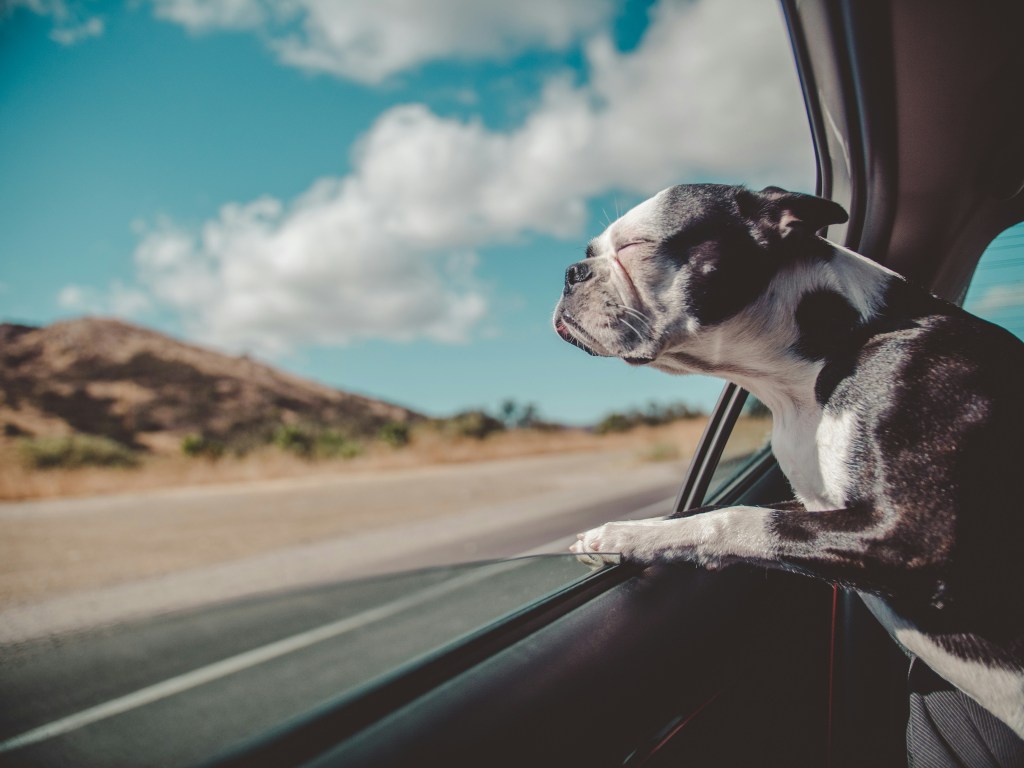
Photo by Avi Richards
I’m scratching Sleeprunner’s ears when I feel Álvaro looking at me. He is halfway down the block, moving toward me like a cheap plastic windup toy, cocky and uncertain at the same time. He knows his gang is watching him. He is being tested, and I am the test.
Álvaro is ugly and stupid. I’m just ugly. Sleeprunner smells Álvaro’s malign intent and rises to his feet. It’s okay, I tell him. I have to deal with this. I have a plan.
I’m sitting on the barstool our landlady has left outside. When I look up and see my mother watching from the window, I almost laugh. Even my mother wants Álvaro to win. Everyone but Sleeprunner wants me to start exercising my female charms, weak though they are. They want me to accept reality and start acting like a normal fifteen year old human girl.
“Hey, Morena.” Álvaro crosses his arms and leans against the cinderblock wall. He turns sideways so I can admire the new nersh implant at the base of his neck. I know he will keep that part of his head shaved from now on.
Morena is my nickname, a crude allusion to my father’s African blood, but more importantly, to my mother’s coupling with a stranger. I’m no darker than Álvaro, but I have distinctly un-Mexican curly hair. Like most nicknames in Agua Prieta, it’s an insult, a blunt reference to my physical appearance. If people like you, the insult is also an endearment. No one likes me in Agua Prieta.
I tell my dog, I’m going to play along, Sleeprunner. Then we’ll run away, I promise. Álvaro just thinks I’m stretching. He can’t understand Dog. To other humans our conversation looks like random movements. I don’t know why I understand Dog, I just can, and it’s the one thing that makes me special
You don’t have to play along. We do not serve humans. Sleeprunner doesn’t use my human name. He calls me by my dog name, which is untranslatable, because it’s a smell name. But it means something like, “the smell of a determined and serious puppy”. Sleeprunner calling me a puppy is not an insult even though I’m nine years older than him and human.
“Hey, Álvaro!” I force my voice to sound excited and girlish.
Thrusting his jaw forward, he turns his neck proudly from side to side. I remember I’m supposed to exclaim over his implant.
“Oh my God! You got it! Does it hurt?”
“Nah.” Álvaro spits deftly into a pothole. “I got it done in Hermosillo. I know a guy there who can do it for three thousand.” Then his face transforms into that of a young boy, eager to see the impression he has made.
I’ve been to Hermosillo twice. It’s like Agua Prieta but about twenty times bigger. It’s dry and dusty and hot, and smells like garbage and exhaust fumes because Mexico still has hordes of ancient trucks that run on diesel. Sleeprunner and I are going to go somewhere that smells nice. And I don’t want an implant. Talking to dogs is much better than lame nersh entertainment, though to be honest I would like to enter a verse to know how it feels to be in live action shows playing in your head. I see my mother shifting in the window and I remember I’m supposed to be flirting.
“What verses have you gone to, then?” I toss my head in a gesture that I believe is teasing, challenging but not too challenging for a bantam rooster like Álvaro.
“Dog Fight, Galaxy Trader.” He looks at me carefully. “Bitch Lord.”
I swallow. “Isn’t it rated X?”
I watch Álvaro consider the tiny range of reactions available to a wannabe gangster. He can’t spit, it’s too soon since the last time. He opts to turn his head from side to side, like he’s working a kink out of his neck.
“Yeah. Any noob can hack in. Even you, if you wanted to.”
I feel cold all over as I force myself to answer. “I don’t even have an implant. Or three thousand.”
Now, in a move that is clumsy despite his careful practice, Álvaro moves close and puts his arm around my shoulder. “Remember when we were little? I used to give you Pingüinos because I felt sorry for you. I looked out for you.”
He tries to meet my eyes but I refuse to look at him. Then he says, “I could front you for the implant, babe. You could pay me back.”
Álvaro gave me snacks when we were little? I have no memories of Álvaro from when we were kids, but I have known him all my life.
I say, “Pay you back how? I don’t have a job.”
Álvaro sniggers. “Everybody’s got to make a living, Morenita. Here’s your chance.”
Some part of my brain is telling me I need to put a name to what is going on here. Álvaro wants to bitchlord me in the nersh.
I kind of guessed something like this would happen, but the reality hits me hard. I look over at my mother. She looks back at me, impassive. Her black eyes bore into mine, warning me not to throw away this “opportunity”. I hate her at this moment more than I have ever hated her. Álvaro’s arm around my shoulder feels like a weight, a dead thing. I shake it off before I remember not to. I can’t flirt anymore.
“I’ll think about it, Álvaro.”
Sleeprunner growls and Álvaro backs away from me. We both smell his fear, mixed with hope and lust, as he walks back the way he came. Not too fast. The whole street is watching.
~
When Álvaro is gone I cross the street to the tiendita and stand in the doorway for a long time. The woman behind the counter ignores me. She knows I can’t steal anything because all the merchandise is out of reach. Sleeprunner is around, prowling, doing dog things I don’t understand. I don’t go home until I see my mom walk out into the dusk. I slip into our room and grab my stuff. Seven thousand pesos hidden in the stuffing of my old teddy bear. All the clean clothes I see lying around, a mixture of hers and mine. A pack of María cookies and a two-liter bottle of Agua Tehuacán. I stuff it all into a plastic bag. I’m out of the room I’ve shared with my mother all my life in about forty-five seconds.
Sleeprunner is waiting for me outside. You were headstrong today. Now you will follow my lead. We go among dogs now.
I nod, a little embarrassed. I’m not a hundred percent happy about the way I handled Álvaro, either. I just know that if Sleeprunner and I had tried to fight him, Sleeprunner would probably be dead.
I bought us time. Now we can get out of here. I can’t always be noble like you, I tell him.
Instead of answering, Sleeprunner sets off down the street. It’s dark now, and there’s a slight chill in the October breeze. The streetlights don’t work, not since the narcos took over years ago. There’s a giant metal barrier on the north side of town, and the other side is another country. I’ve never been across the border, but they say that the whole reason for the narcos, and Agua Prieta too, went away when Arizona turned into some kind of giant armed camp. No one gets in or out of there now. The narcos might control Sonora, but they aren’t making a lot of money off it. That’s probably why they’re taking over the shadier parts of the nersh. Virtual sex, they call it. But they don’t let the women tune out; that takes away the fun, apparently. I shudder.
Sleeprunner is making for the western edge of town, I see. I hurry to stay in view of his faint shape while trying not to run through the piles of garbage that Sleeprunner can avoid by smell. The big question is whether we’ll run into any of Álvaro’s junior narco gang. Then I see he’s headed for the homeless camp.
I catch up with Sleeprunner just as he reaches it. There’s a fire in the center of what used to be a soccer field. A rubber tire is burning, emitting pungent, acrid waves that are visible in the hazy red firelight. Then I see dogs standing up, twelve or fifteen of them. But the dogs don’t act normal. They are solemn, not excited by strangers. A black dog steps forward.
You came, Sleeprunner. With the full-grown pup. The little pup is here, too.
Sleeprunner squares his body and lifts his head like the black dog is his strict father. I wonder if this is a gang situation, then I decide it isn’t. There is no menace in the other dog, just authority. Then in the firelight I notice a small white dog leading a child forward. It’s a boy, I see, walking uncertainly. He’s blind.
Wait, what’s going on here? I blurt out.
We travel. To a better place, Sleeprunner tells me sternly. Then he turns back to his leader and receives his orders.
~
Sleeprunner leads me, the boy, and the small white dog away from the camp, into the moonlit desert. There’s a car parked on a dirt road. Sleeprunner shoves aside a rock with his nose.
There. The object used to make the car move.
I squat down by the hole and pick up a plastic fob with one key.
I don’t know how to drive. I’m only fifteen, and it’s not like my mom had a car.
You will learn.
Then the little boy speaks. Where are we going?
I can just make him out in the near darkness. He’s probably seven or eight. The little white dog has a rope tied around her neck, that’s how she’s leading him. I don’t like little kids. Something about them makes me uncomfortable. The fact that this one is blind makes me feel guilty and uncomfortable.
To the sea.
It is the little white dog who answers. Her frail body looks like it is shivering in the moonlight.
Our destination is a bit of a surprise. To the Sea of Cortez? Or the Gulf of Mexico? I’ve never been to either. If I have to drive, I doubt we will make it that far east or west.
There is a device. Sleeprunner points to the hole and I bend down to find a phone, too. Access information on how to drive. Tell us when you are ready to begin. Hurry, because the car’s owner will come soon.
It’s a nice burner, the kind that has a month of battery and unlimited data. No password. This is definitely a narco phone, which means it’s probably a narco car. I laugh at the absurdity of it all. I’m supposed to watch a video, then drive some dogs and a little kid across Sonora in a stolen narco car? Then I look at Sleeprunner and quickly search for “How to drive a car.”
I’ve never paid attention to cars and trucks or how to drive them. I know there are steering wheels, brakes, and gas pedals, these words are parts of normal conversation somehow. Now I concentrate on where these things are located and how to use them. Even stupid people can drive, I remind myself. I watch three videos before I decide I’ve seen all the critical material.
Then I get behind the wheel. I turn the key in the ignition and move the gear shift to “D”. I press on the gas, then panic when the engine roars and the car lurches wildly. Brake, I remember. I push down hard and the car throws me forward. The jolt makes me realize something.
The little kid can speak Dog.
After I’ve spent a while learning to use the brake and the gas pedal, Sleeprunner barks a command from the low mound of creosote bushes where the three others have been waiting. Enough. We leave now.
The dogs and the boy walk to the rear door and stand there expectantly. I remember that the boy might have hands, but I am the one who can see the doorhandle. I carefully move the stick from D to P, get out of the car, and let them into the back seat.
I’m not ready yet, I tell Sleeprunner, looking at him in the rearview mirror. He says nothing. Apparently I’m supposed to keep it together and figure it out.
I think for a moment. Headlamps. I fumble with switches and knobs, activating wipers, blasts of air, even music, until beams of light shoot from the front of the car, illuminating more creosote bushes. Then I see the long legs of a human shadow. A man is running toward us, shouting.
Drive now, Sleeprunner tells me needlessly. I push hard on the gas pedal, and gravel flies from the tires. The man jumps away from our path, which is good because I don’t know how to avoid him. Somehow the car moves straight down the dirt road and we’re on old, cratered asphalt, and I know where we are. This is the road to Hermosillo.
~
The headlights are like a pointer in the dark. I just have to keep steady pressure on the gas with my right foot and then gently turn the wheels to follow where the headlights lead. I’m not sure I know how to stop, though.
When I calm down I think about Sleeprunner and this other life of his. I knew he associated with his kind; I have watched him chat with the other street dogs of Agua Prieta. Now I think back to when Sleeprunner came to me, still in his puppyhood. I was nine and a half.
I doted on Sleeprunner like he was my baby. For the first time in my life I had something to love, and something loved me back; a sweet pile of fur that wanted my love as much as I needed to give it. Then he disappeared for several weeks. I was frantic with worry.
He came back late one night, whining softly at the door. His ear was torn and he was limping on three legs. Fortunately my mom was out that night. She barely tolerated Sleeprunner; a gravely injured Sleeprunner would have been like bringing garbage into the house. I filled the big tamale pot with water (why did we have it since my mom never cooked?) and lifted him inside. The water turned brownish red from dirt and blood. When I dried him I searched for wounds in his curly grayish-white fur. I found many.
What did they do to you, sweet boy? It’s like they were torturing you.
Yes, he said. Then he fell asleep.
At dawn, before my mother came home, I moved him to the alley behind our house. I hid him in a cardboard box turned on its side, with a bowl of water and some food. Being a young dog, Sleeprunner healed quickly. Within three days he was running around again.
But things were not the same after that. He wasn’t a puppy anymore. He was wary, dignified. No more silly expressions of love, no more snuggling. He still let me scratch behind his ears, though, and I knew he liked that even if he was too proud to admit it.
This was around the time girls and boys my age were realizing they had to stop being kids soon. We were sorting ourselves into groups, and now I see that, of all the identities and memberships we picked up and threw away like dress-up clothes, the ones we chose when we were eleven or twelve were going to stick with us, harden into our adult selves.
Maybe because my mom is so unsentimental, I never got any frilly little girl clothes. I was the only girl I knew without pierced ears. I’m not sure if my mom brushed my hair or bathed me past my babyhood; I always got the sense she found my body repugnant. Not being able to keep myself clean was one more thing to make fun of me about. Being mocked for being dirty didn’t bother me that much. What really bothered me was when she said, You’re not a real girl because you have no feelings. You never cry. Not even when you were a baby. You’re some kind of heartless freak.
Anyway, when I was ten or eleven, my mom went from ignoring me to noticing that I was a young female who would soon compete with her, right when the boys and girls my age were noticing the same thing about each other. I’m not sure what it’s like in other places, but in Agua Prieta this meant I had two groups to choose from: pretty girl or nasty girl. If you were a pretty girl, people agreed that you were valuable, but you had to behave like a little innocent doll. They treated you respectfully, to your face at least, even men and boys. If you could keep this up, eventually people would say you were a “lady.”
If you were a nasty girl, your payment were not in respect, but in pesos. At least you knew where you stood in people’s calculations. A lot of the nasty girls my age ended up getting more money than you would have guessed. This is intolerable to my mom. She can’t stand it if men pay attention to anyone but her. I don’t know what will happen when she gets too old to attract them. Maybe she will get a nersh implant. Supposedly you can pay extra and get filters that make you look younger and prettier.
Some part of me is still standing up for the nasty girls, probably because that was the path I was heading down. When I was ten or eleven I was turning into a nasty girl not because I wanted to, but because I wasn’t pretty. What other options are there?
There’s no school anymore in Agua Prieta, but kids used to gather at the school building most days. Some years adults would try to set up regular instruction, cleaning out the junk in the classroom and finding desks, chalk for the chalkboard, arranging for different people to teach us, but the so-called teachers would run out of steam after a few weeks. Weirdly, most of us would go to the school building anyway. The younger kids played school, taking turns pretending to be the teacher, reciting the alphabet and numbers, making up their own arithmetic. By age eight or nine, though, the kids spent their time playing dirt soccer or in intense group fantasies, such as mock battles. In my case, I passed most days with two other girls playing a game that we called Richie Rich. We pretended we were lost in a giant mansion, wandering from room to room surveying our vast wealth. Even though there was no plot, I never got sick of playing this.
My two companions were going to try to make it as pretty girls, and when they started to get tired of playing Richie Rich, I resisted because I knew this was the end of my childhood. I think they felt sad about leaving me behind but everyone knew there was no point in including me.
“You’re not totally ugly, Aurelia. You have nice eyes,” one of them said. I remember perking up at this. But nice eyes or not, I could not hide in my imaginary mansion anymore. I began to study the nasty girls and their male counterparts.
I wouldn’t have hated being a nasty girl, so I thought at the time, except for one thing: having to protect the feelings of boys. It wasn’t fair. Boys got to pretend to be tough and get taken care of by girls, but girls had to actually be tough, while pretending to be weak, with no one to take care of them. What was in it for the girls? A plate of food once in a while? A baby to take care of and worry about? I thought about my mom and realized that the only way this system works is if you believe men and boys paying attention to you is worth something.
I remember the day I walked over to the side of the schoolyard that was the nasty girls’ turf, announcing my allegiance. I was wearing a tight black shirt with silver glitter and some pants that made my rear end look bigger than it really was, and I had applied a good amount of my mother’s makeup to my face. I felt stupid but determined to get this over with.
Sleeprunner saw me. You are too young. You have not come into estrus. What game are you playing?
Humans make you play a role. Females have to play this one. I don’t like it either, but what choice do I have?
Dogs, too, have roles, but we have dignity. Where is your dignity?
My embarrassment turned to confusion.
I’m not allowed to have dignity. That’s not how it works here.
Then you don’t know what dignity is. It’s not something others give freely. You earn dignity through force of will.
I thought about this. Sleeprunner was a street dog, but he had self-respect. I went back inside and washed my face and put on some old comfortable clothes. I didn’t go to the playground that day. I realized I never needed to go there again. Then I waited. I waited four years until Álvaro came for me.
~
Soon we are driving through Cananea. I worry someone is going to notice the too-young girl who doesn’t know how to drive. But it is the middle of the night and I see no cars or people. The gas tank is mostly full. I think Hermosillo is probably another five hours away, close enough to reach on a tank of gas. I think of the old corrida, “La Cárcel de Cananea”, and the rollicking tune stays in my head long after the town is behind us. My right leg is tired from pushing the gas pedal but I’m afraid to let up on the pressure. It’s starting to get light before I say anything to the boy.
“What happened to your eyes?” I say. I speak Spanish because you can’t really speak Dog to someone who can’t see. Or can you? How does this blind boy communicate with his dog?
“It’s called trachoma.”
“What’s that?” I look at him in the rear-view mirror. I can barely see his face in the dim light. Even so, there is something different about his expression, a vacancy. It’s this vacancy that told me the boy’s eyes do not work.
“It causes blindness,” he says.
“I figured that part out. What’s your name?”
“Wes. Wesley”
I say the name back at him uncertainly. “Ues—Uessli? Is that some kind of American name?”
“Yeah. My mom and I escaped from Arizona right before the wall went up.”
I’m confused. Arizona was cut off from Sonora before I could even talk. Then I say, “Wait. How old are you?”
“Almost thirteen.”
I look at the boy again. It is just possible that he is an emaciated twelve year old, not a seven or eight year old.
Then he sits up and sticks his chin out. “I’m not completely blind, by the way. I’ve been going blind for years, but if I get surgery and medicine I might get some of my sight back.”
“How do you know you have trachoma?”
“I read about it online, back when I could see better.”
“How come I’ve never seen you before?”
“I’ve been on my grandparents’ ranch.”
Ahead I see the sign for Hermosillo, only thirty kilometers away. There is more traffic now.
“Where’s your grandparents’ ranch? Why didn’t they take you to a doctor?”
“Near Turicachi, have you heard of it? They died.”
“When did they die? Where did you live after that?”
“I lived with—Jumping Rat Smell. On the ranch.”
I laugh, and I see him smile at my understanding. Dog names sound ridiculous in Spanish.
“Just you two? For how long?”
“Five years.”
“Wow.”
“Indeed. Then I really started to lose my sight, and I couldn’t find food. Jump can’t find enough for both of us. To make matters worse, people started showing up. People who suspected there were no adults living there.”
Wes’ Spanish sounds old-fashioned and rural; I can imagine him being raised by elderly rancheros. I wonder what happened to his mother but I don’t want to find out. Instead I say, “That sounds tough. Kids can’t really live out on their own in Sonora.”
The sun makes it over the horizon and shoots rays through the rear window, turning the boy’s head into a black disk. Wes is not done talking. “No one knew my grandparents were dead, but there were people sneaking around. I scared them off with gunshots, but someone was going to figure out we were alone soon.”
I admire the desperate, lonesome quality of his story. I imagine myself living on a ranch, alone with Sleeprunner and a shotgun. I say, “It sucks that you couldn’t keep living there.”
“We had a close call and decided we had to leave.”
Sleeprunner announces that he has something to say by shaking his head. I watch his ear, eye, and head movements in the rear-view mirror.
Drive past Hermosillo. Then drive toward the sea. On small roads.
I nod. Imperceptibly, I’ve grown used to driving fast, and now the cars passing me do not make my hands sweat.
Then, with no warning, Sleeprunner says, Here. Turn here. Why didn’t he tell me thirty seconds earlier? I am beginning to understand the difference between drivers and non-drivers.
I take the exit too fast and it feels like the wheels are coming off the road so I brake hard. The car behind me honks angrily and I remember I was supposed to use my turn signal.
We’re in some abandoned housing development south of Hermosillo. Quintas del Rey, a faded sign announces grandly. I drive west on an unpaved road as the sun rises higher behind us. Breakfast time, my stomach tells me.
“There are cookies in that bag,” I tell Wes.
Wes finds the bag without being asked twice. He wolfs down half the pack of Marías and I feel guilty for not offering them sooner. He stretches forward to offer me the rest.
“No, it’s okay. I don’t usually eat breakfast. We can get some more food later.”
Jump nods at me approvingly.
Then all at once the straight, empty dirt road ends. In front of us, a small black mountain blocks our progress west. I see faint tire marks continuing into the hard, tan desert. Is it safe to drive this kind of car off the road? I know better than to get stranded in the desert.
Use that track. It will meet up with another road, Sleeprunner tells me confidently. Has he been this way before? There were times I didn’t see him for a few days, but I never guessed he was this far away. Who drove him?
I have other questions for Sleeprunner.
Do you realize this is a narco car? They will kill us for this.
Sleeprunner replies matter-of-factly. Only the man who chased us knows what happened. The Army of Dogs has killed him by now.
This makes my skin creep. Not because the man was killed. Because I am starting to understand things.
Where are we going, Sleeprunner? Who are we meeting?
Commander. Sleeprunner sits up straight when he says this.
Commander is a dog?
Sleeprunner says nothing. Of course Commander is a dog.
I say, It happened when you were a puppy, didn’t it? That time you disappeared and came back half dead. You changed.
I was taught discipline. Then I learned what dignity means. Sleeprunner speaks with a controlled rage that I have never seen before. I was obliged to be your emotional support animal. Commander teaches us that dogs do not serve humans. You will learn Dog Ways now.
I suck my breath in, shocked. But we loved each other. I know we did. I felt it. I still feel it.
How do you know that? Sleeprunner’s face is expressionless in the rearview mirror.
My eyes fill with tears. Of all things, I think of my mother, how she mocked me because I would not cry. Of course I never cried in front of her. Now I understand why she hated me. Because I could love and she could not.
Then I think of Álvaro. Being a boy meant he had to join the junior narcos, he didn’t have any more choices than I did. What if he believed I loved him the way I thought Sleeprunner loved me? Didn’t Álvaro understand that all he wanted was to use me? I feel the kernel of truth. Álvaro’s one-sided feelings are both real and not real. Just like mine.
I say nothing while I avoid rocks in the faint trail. Soon we meet a dirt road again and I keep driving west. The thick smell of briny rot is like knowledge from a dream. Then, past noon, we crest a sandy hill, and I see it.
The sea.
It is immense, glinting, flat and gray-blue. My eyes try to make sense of the line between the sea and the sky but there is no way to comprehend the horizon. Then I feel the emptiness that waits here. This is the end of my road. I have left one kind of death for another.
No. I will not die here. The will to survive comes to me in a rush of adrenaline.
I look back at Wesley. We are two beings who have somehow fallen off the edge of our species and into another. His sightless eyes seem lost in thought.
In Spanish, I say, “Wes, ready to learn Dog Ways?”
“Yes,” he says. “We should learn Dog Ways. But you and I will still be humans. If we take care of each other we will be okay.”
“Okay.” I wipe my eyes on my shoulder and press down on the brake pedal. The car begins to sink into the beach and then moves no more.
CARMEN CLARKE lives in Maryland with her family. During the day she works as an infectious disease epidemiologist. She has written a novel entitled Eusebio’s Tale and many short stories. See more about her work at wayofdeeptime.com, Bluesky@wayofdeeptime and Threads (wayofdeeptime)
Shore Some women’s voices are heavy with stories of men who never make it home. Their oaths

I land in Boston early, hit the interstate in my rental car while it’s still dark. I

She was a weirdo.
What—she didn’t know?
She knew.
Unaltered photo by Sushanta Rokka A dusty Patria Pasi XA-180 painted in green camo trundles down the

1 / We already know how bad language can be—poor grammar and creative punctuation; potty-mouths and shitposters;
Odile stood in the darkest part of the yard, waiting, waiting, and Boy was nowhere in sight.